WEB-300 (OSWE) equips you with advanced web application exploitation skills, attack chaining techniques, and secure coding assessments, recognized globally by Offensive Security.
Hands-on, lab-based WEB-300 / OSWE training
Intermediate-level course aligned with Offensive Security
Master advanced web attacks, exploitation, vulnerability assessment, reporting, and documentation
Course Duration: 80 – 100 Hours
Course Level: Intermediate
Course Includes: Training and Certification
Speak with our admissions team about OSWE.
Offensive Security WEB-300 (OSWE) — master advanced web attacks, vulnerability exploitation, attack chaining, and real-world offensive security techniques to become a certified web security expert.
Validate your advanced web application attack and exploitation skills, vulnerability chaining expertise, and real-world offensive web security techniques through the globally recognized WEB-300 / OSWE (Offensive Security Web Expert) certification.
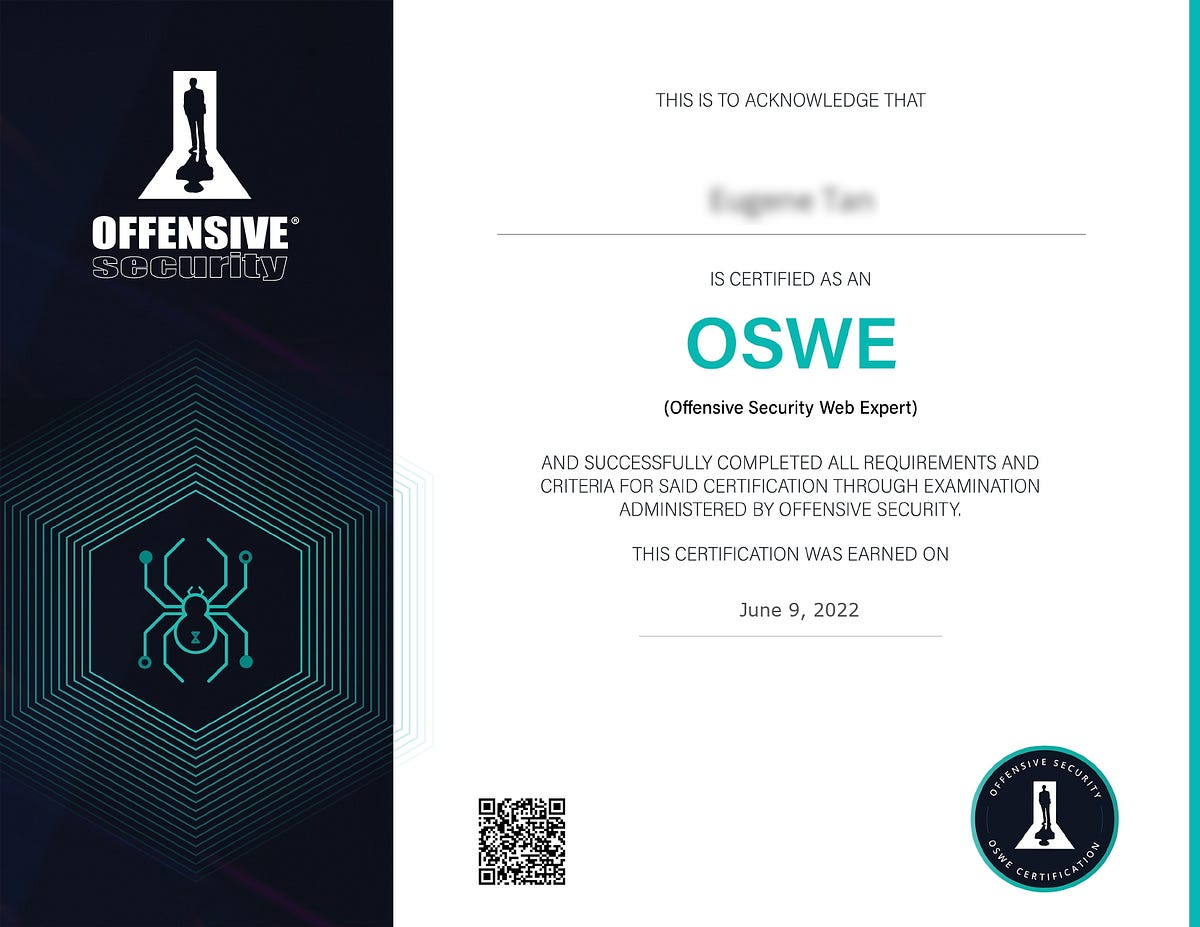
WEB-300 / OSWE validates your advanced skills in web application penetration testing, exploit development, vulnerability chaining, and real-world web attack simulations. Gain hands-on experience to excel in professional offensive web security engagements.
Understand how attackers can manipulate JavaScript’s inheritance model to inject malicious data, compromise logic, and execute code remotely in your web applications
Bypass filters, access internal resources, and exploit complex application architectures through SSRF vulnerabilities
Master web security tools and methodologies like: fuzzing, static analysis, dynamic analysis, and manual code review
Analyze source code and parse application logic to identify potential attack vectors and security vulnerabilities
See how attackers store malicious code on web servers to launch persistent XSS attacks on multiple users over time
Understand how attackers take over user sessions to gain access to sensitive data and functionality
Identify the ways attackers can exploit vulnerabilities caused by deserialization in .NET applications
Explore the techniques attackers use to execute system-compromising code on targeted web servers
Use different techniques to exploit SQL injection vulnerabilities to compromise databases without direct application feedback
Understand how attackers use SQL injection, XXE attacks, and compromised file uploads to extract sensitive data from web applications
Understand how attackers can bypass security mechanisms designed to prevent malicious files from being uploaded
Learn how to exploit type juggling and loose comparison behaviors in PHP to bypass authentication to perform malicious actions
Learn how attackers can access private data, execute commands, and establish persistent backdoors by leveraging PostgreSQL extensions and user-defined functions
Evade regex-based input validations to inject malicious payloads into web applications
Bypass authentication mechanisms and perform unauthorized actions by exploiting “magic hashes” in PHP applications
Explore the techniques attackers use to bypass character restrictions in web applications in order to inject malicious payloads and manipulate application behavior
Learn how attackers can leverage user-defined functions to create reverse shells in order to access underlying operating systems
Learn how attackers store/execute malicious code and exfiltrate sensitive data by abusing large objects in PostgreSQL databases
Learn how the browser’s Document Object Model (DOM) can be manipulated to execute malicious JavaScript code in web applications without direct server-side interaction
Identify and exploit vulnerabilities in server-side templates in order to execute remote code, disclose information, or escalate privileges
Understand the risks associated with poorly implemented random token generation in web applications and how attackers can exploit them or compromise user sessions
Discover the ways attackers can exploit XML parser weaknesses to access files, execute commands, or perform DDoS attacks, and how to prevent XXE vulnerabilities in your web applications
Learn how vulnerabilities in database functions can be exploited to execute arbitrary code on the server to compromise your web applications
Identify and mitigate WebSocket vulnerabilities that can be used to inject operating system commands to gain control of underlying servers
Trusted Partners
Organisations across banking, government, fintech, consulting and energy trust Securium Academy to train their security teams.


Recognition
Independent recognition for the quality of our training, labs and learner outcomes.
OSWE is ideal for senior web penetration testers, red team professionals, security analysts, application security engineers, and cybersecurity experts aiming to master advanced web exploitation, vulnerability chaining, and professional web security reporting.
OSWE covers advanced web exploitation and real-world penetration testing skills including:
Recommended prerequisites:
Advanced lab practice is essential to successfully complete the OSWE exam.
Yes, OSWE is globally recognized as an advanced web application exploitation certification. It is respected by cybersecurity firms, consulting organizations, and red team operations worldwide.
OSWE training is delivered via advanced hands-on labs, instructor-led online sessions, and self-paced modules. Typical duration: **80–120 hours**, including complex lab exercises, multi-step exploitation scenarios, and exam preparation.
The OSWE exam evaluates:
Exam Format: Practical lab-based exam, **48 hours** duration, fully hands-on.
OSWE-certified professionals in India earn **₹20 LPA to ₹45 LPA**, depending on experience and role. Senior positions like Web Application Exploitation Specialist, Red Team Lead, and Security Consultant command premium packages.

Securium Academy is one of the top platforms for OSWE training, offering expert instructors, advanced lab exercises, scenario-based learning, and exam-focused preparation for guaranteed success.